The Draper Site: Special Structures, Visitors’ Houses
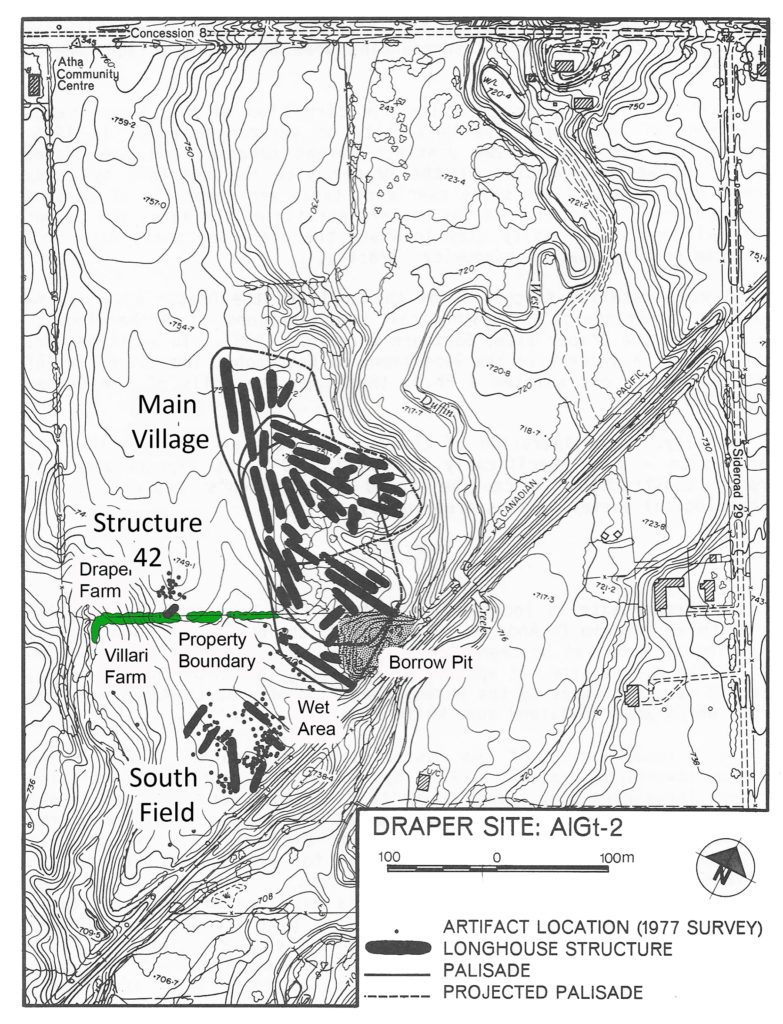
One of the most intriguing aspects of the Draper Site was that it began as a typical small community of about 8 longhouses in a palisaded village, 1.2 hectares in size. Amazingly, it expanded five times to become a 3.4-hectare village comprised of 39 houses, most of which were occupied at the same time, with an estimated population of 1,800 people. Also, quite interesting was that not all of the structures we discovered were longhouses. There were three which I believe were unique structures used to house visitors to the Draper village. We know from historical documents written by early explorers and missionaries…
The Windmill Site
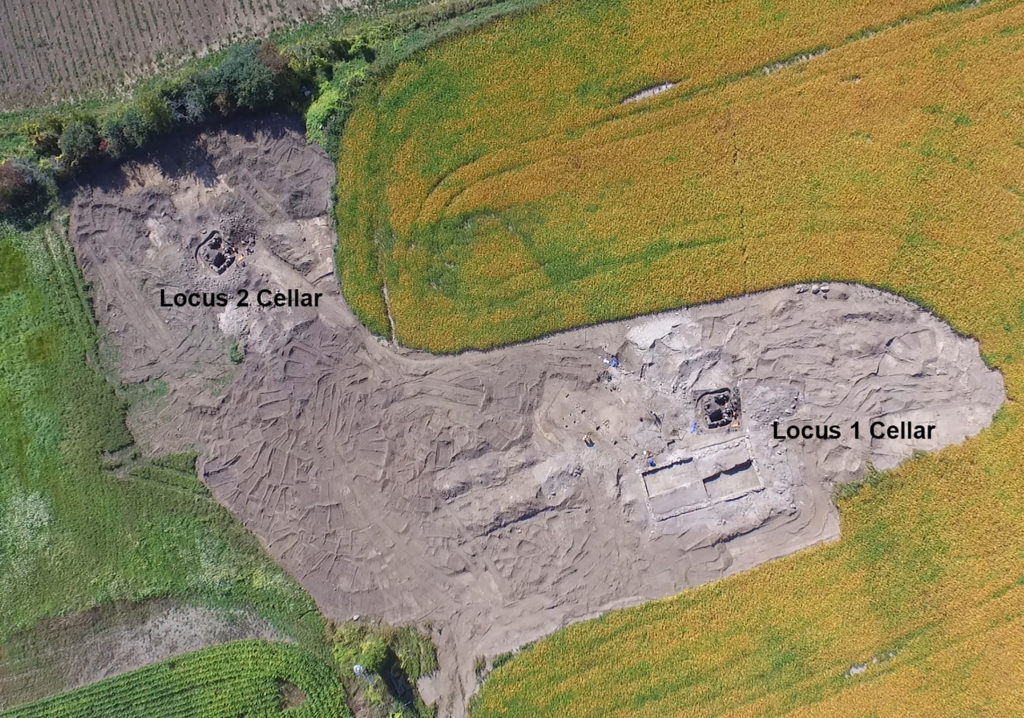
We discovered a second location we called The Windmill Site, inspired by an old windmill still standing beside the site. We also found the cellars of both of these homes which can be seen in the aerial picture taken by our drone. There were thousands of artifacts dating back to the late 19th and early 20th century, most of which were metal. We collected a few as representative samples of the kinds of artifacts in use at the turn of the century.
The Yake Site
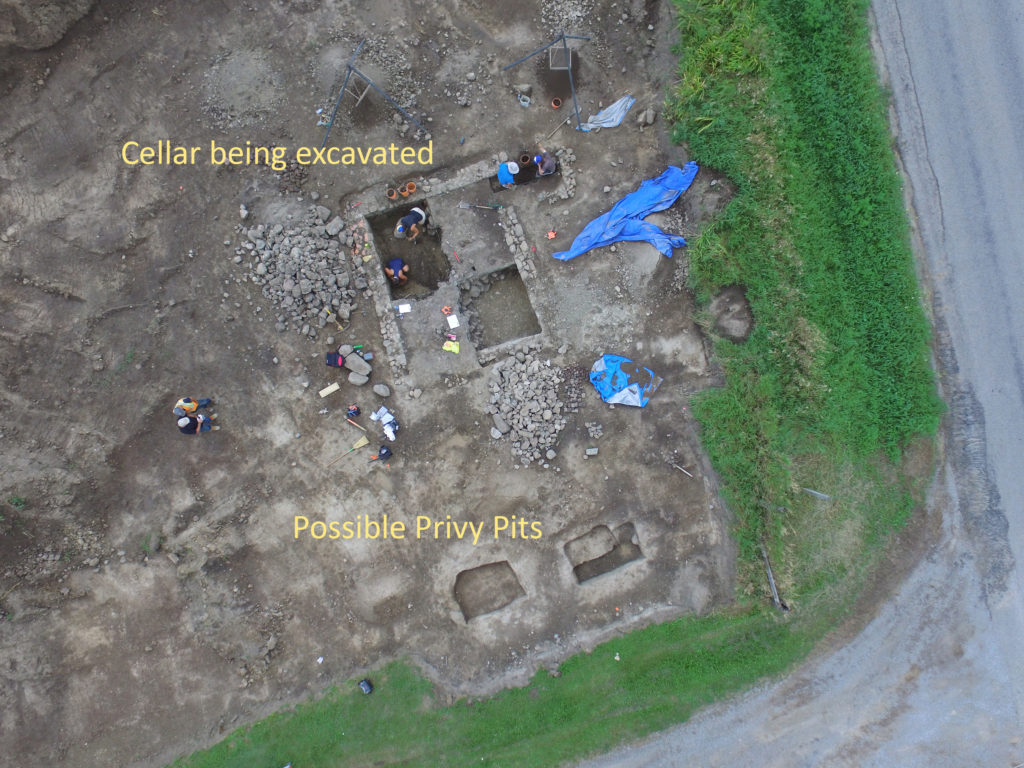
This is the first archaeological site we have excavated that was occupied by tenants. The investigation reminded me of the tremendous variability of 19th century homesteads and farmsteads. It seems that every site is slightly different, and each one provides additional insights into life as it was more than a century and a half ago. Interestingly at times, these insights can be very different than the written history of the era.