The Draper Site: Special Structures, Chiefs’ Houses
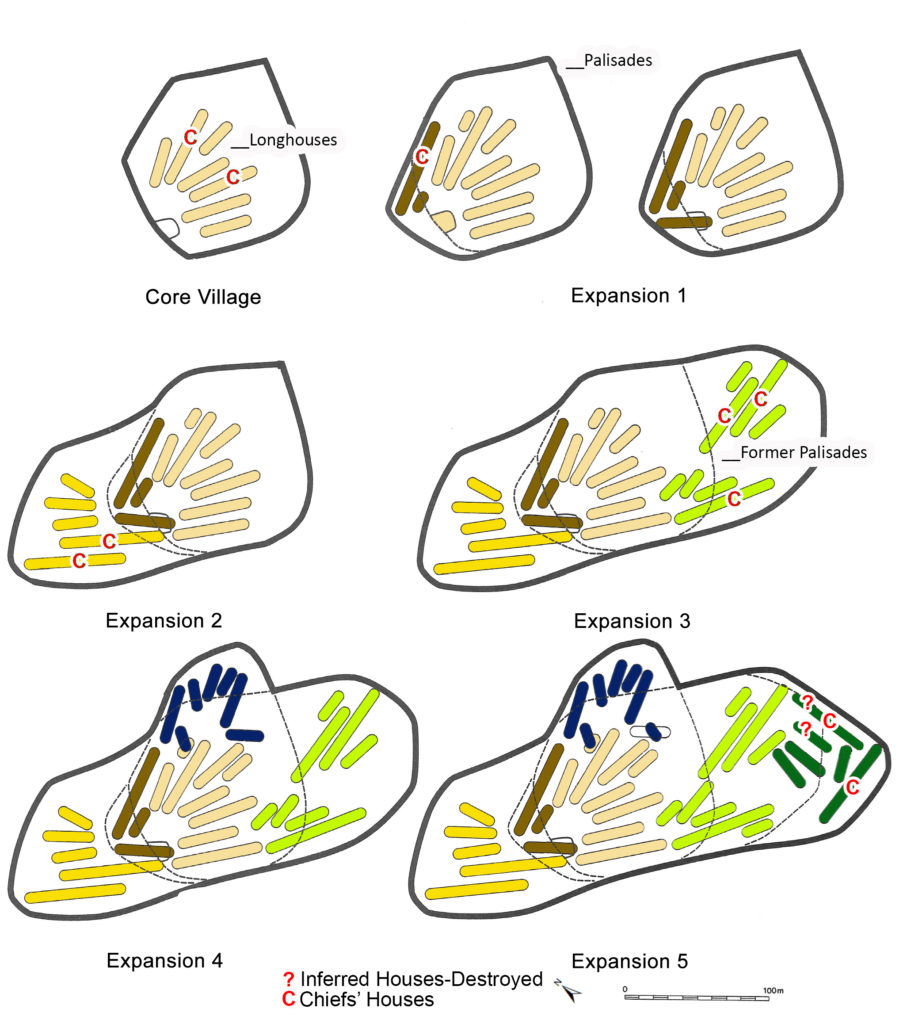
We know from the historical documents of the Historic Huron that these types of houses existed. We can use this data to help us better understand the occupants of the Draper site. It is noteworthy that as the village expanded, these long longhouses were situated on the outer edges of the expanded part of the village. Such a pattern of placement of chiefs’ houses—to potentially assist in village defenses—may be unique to the Draper site.
The Draper Site: Special Structures, Visitors’ Houses
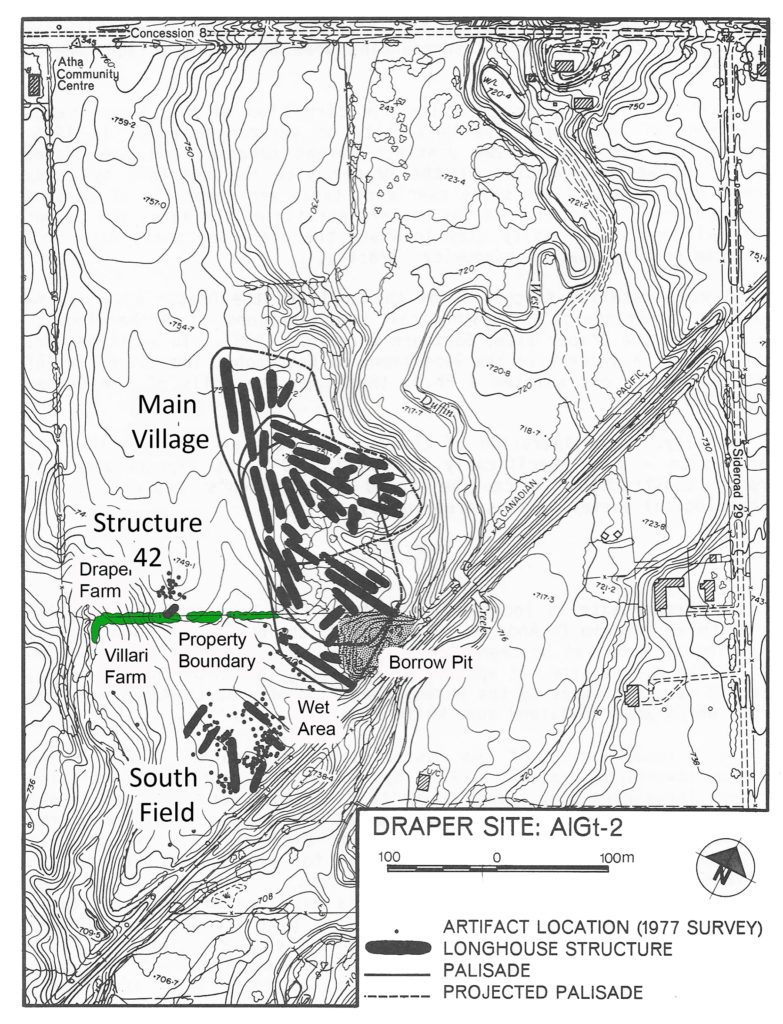
One of the most intriguing aspects of the Draper Site was that it began as a typical small community of about 8 longhouses in a palisaded village, 1.2 hectares in size. Amazingly, it expanded five times to become a 3.4-hectare village comprised of 39 houses, most of which were occupied at the same time, with an estimated population of 1,800 people. Also, quite interesting was that not all of the structures we discovered were longhouses. There were three which I believe were unique structures used to house visitors to the Draper village. We know from historical documents written by early explorers and missionaries…