A Year to Remember

2020 certainly has been a year to remember. I am tremendously thankful that my family and I have remained in good health throughout the pandemic. On the work front, I am so glad we were able to pivot and salvage this year in the field, and at the same time I was given time to write . . . It has been a sentimental journey and an enlightening process to review not only the field work, but the many reports, articles, publications, and graduate theses produced by a relatively large number of people over the last 42 years.
An Artist’s Concept of the Draper Site
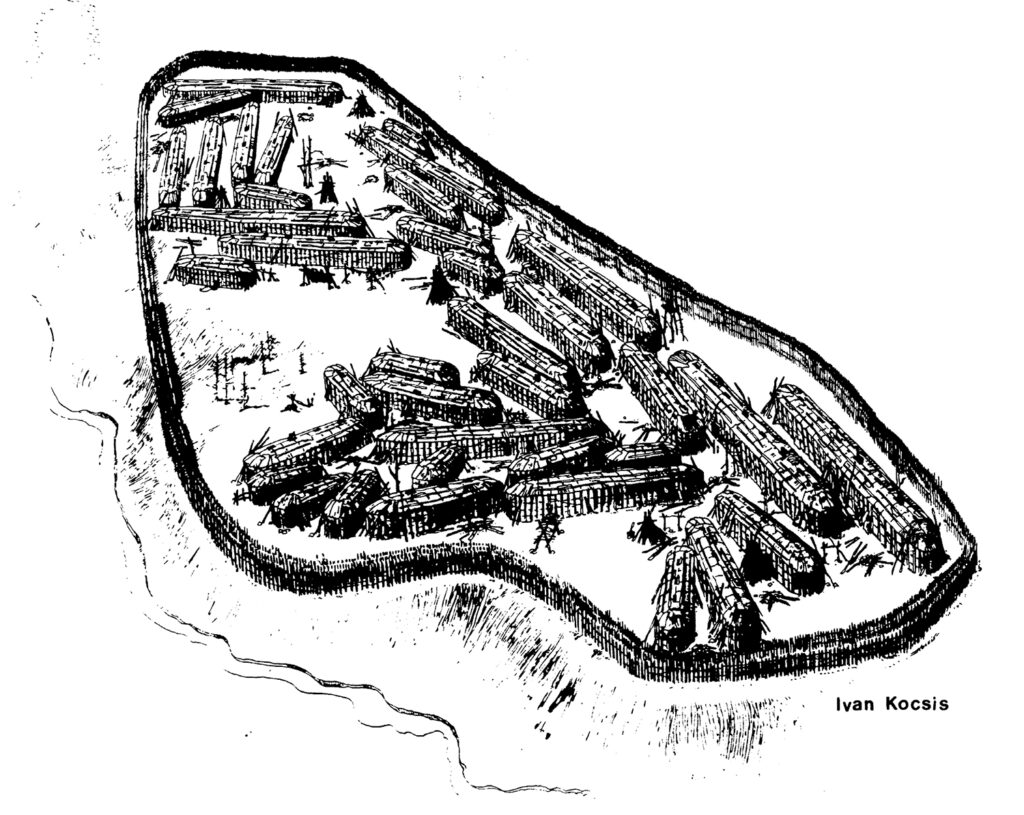
The almost complete excavation of the Draper site represents one of the first and certainly the largest of a Late Woodland village in south-central Ontario investigated on a salvage archaeology basis. I saw our work at Draper as an opportunity to have Ivan Kocsis, a very talented artist in Hamilton, create an artist’s conception of what the Draper site might have looked like after expanding five times to become a very large village of almost 2,000 people. This illustration has generally been very well received and has been used, with permission and proper acknowledgement, in a relatively large number of textbooks on archaeology.
The Draper Site Endorsed by James W. Bradley, Ph.D., Director Emeritus of Robert S. Peabody Museum of Archaeology
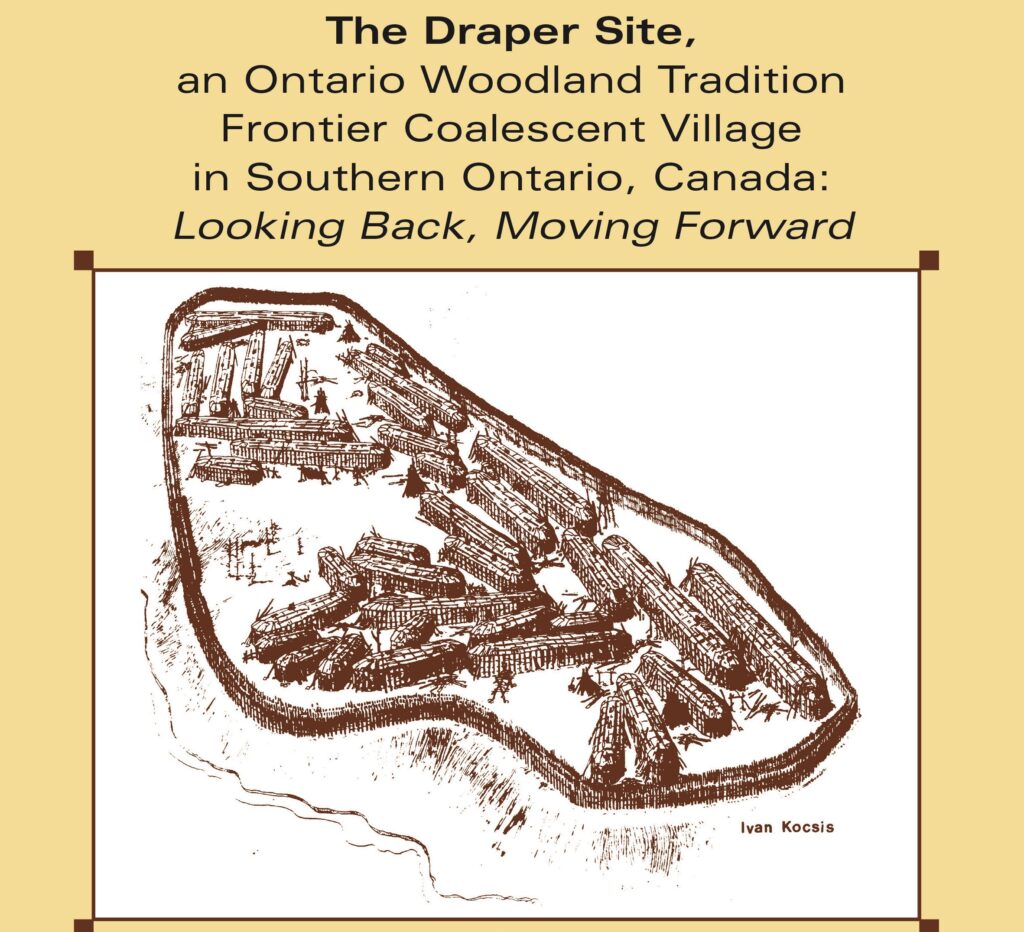
I am tremendously proud to announce the publication of “The Draper Site, an Ontario Woodland Tradition Frontier Coalescent Village in Southern Ontario, Canada: Looking Back, Moving Forward,” the fifth volume in Our Lands Speak series and what I believe is a groundbreaking study. I reviewed more than forty publications, theses, articles, and unpublished reports as a prelude to the reconsideration of some of the key aspects of the Draper site. Draper is used to define a specialized type of coalescent village, the Frontier Coalescent Village. This study provides new insights into the coalescence of at least five smaller villages, some from Duffin Creek and some from further afield at Draper, and the special mechanisms which made this possible and sustainable.