Draper Village Site Defensive Structures Part 2
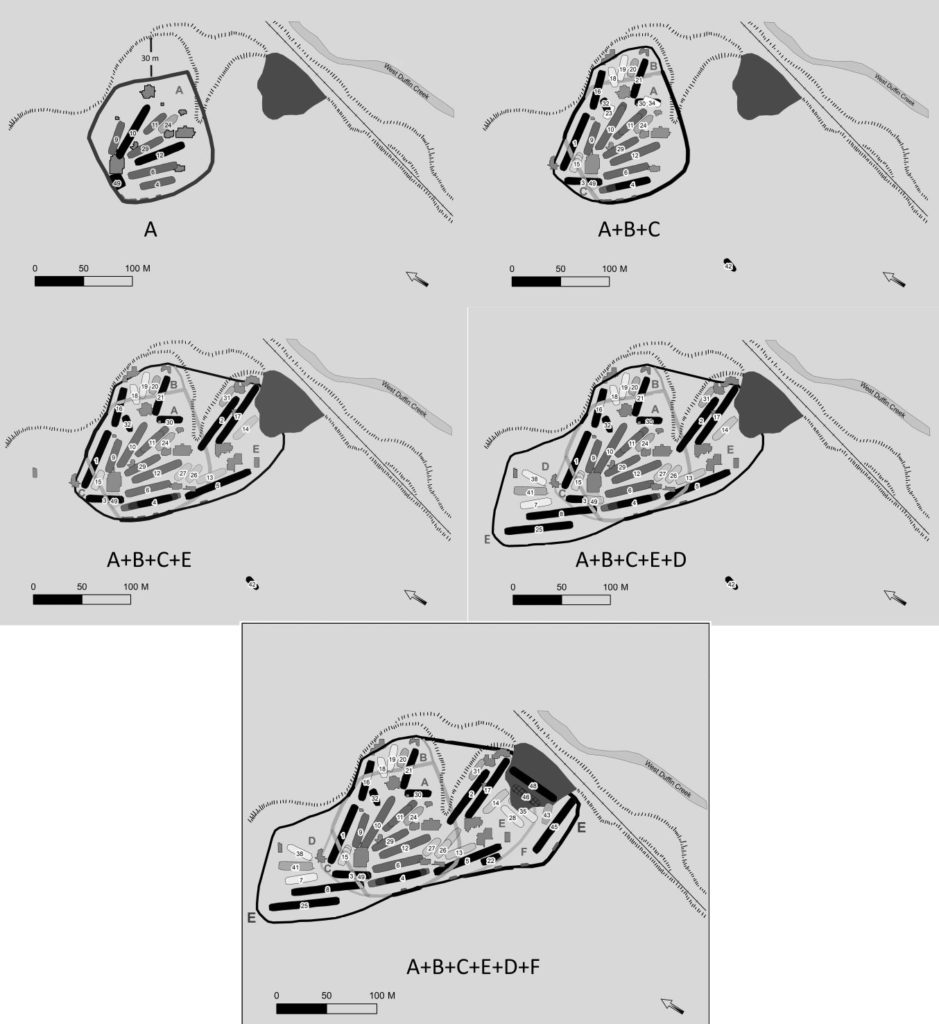
Here, we look at the additional planning that the Iroquoians—who lived at Draper and who moved into Draper—undertook as the various expansions of the village were constructed. As you will see, there was significant planning and I believe that much of this was of a strategic nature. Its specific purpose was to position longhouses to provide additional defensive barriers to assist in the protection of the village . . .
Draper Site Village Defensive Structures Part 1
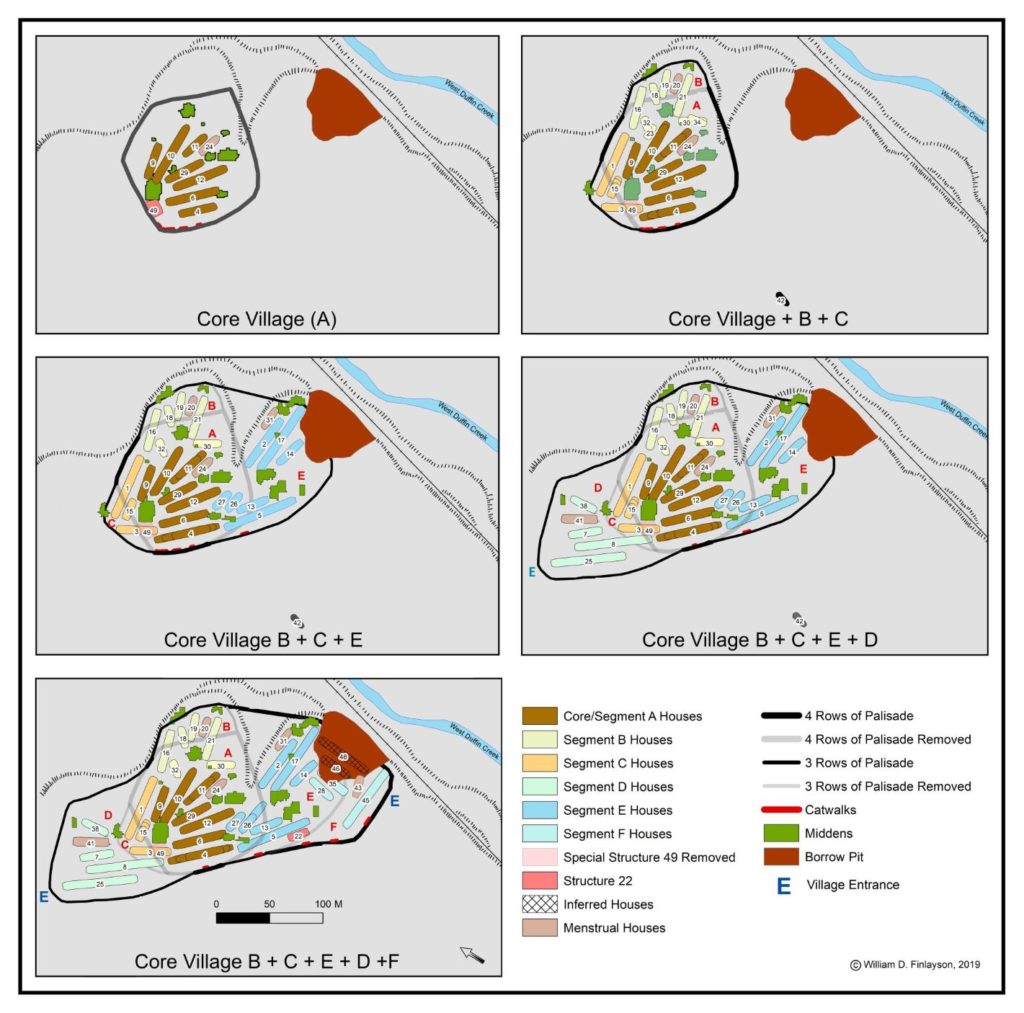
Conrad Heidenreich, a geographer who wrote extensively on the Huron, provides in his 1970 book Huronia a description of one palisade from one village. The following was written by the French explorer Samuel de Champlain during his visit to Huron County in 1615-1616: “Fortified by wooden palisades in three tiers, interlaced into one another, on top of which, they have galleries which they furnish with stones for hurling, and water to extinguish the fire that their enemies might lay against their palisades.”
Iroquoian Arrowhead Collectors at the 16th Century Draper Site
One never knows what unusual artifacts are to be found in the collections at sites such as Draper and what new insights will result from their study.
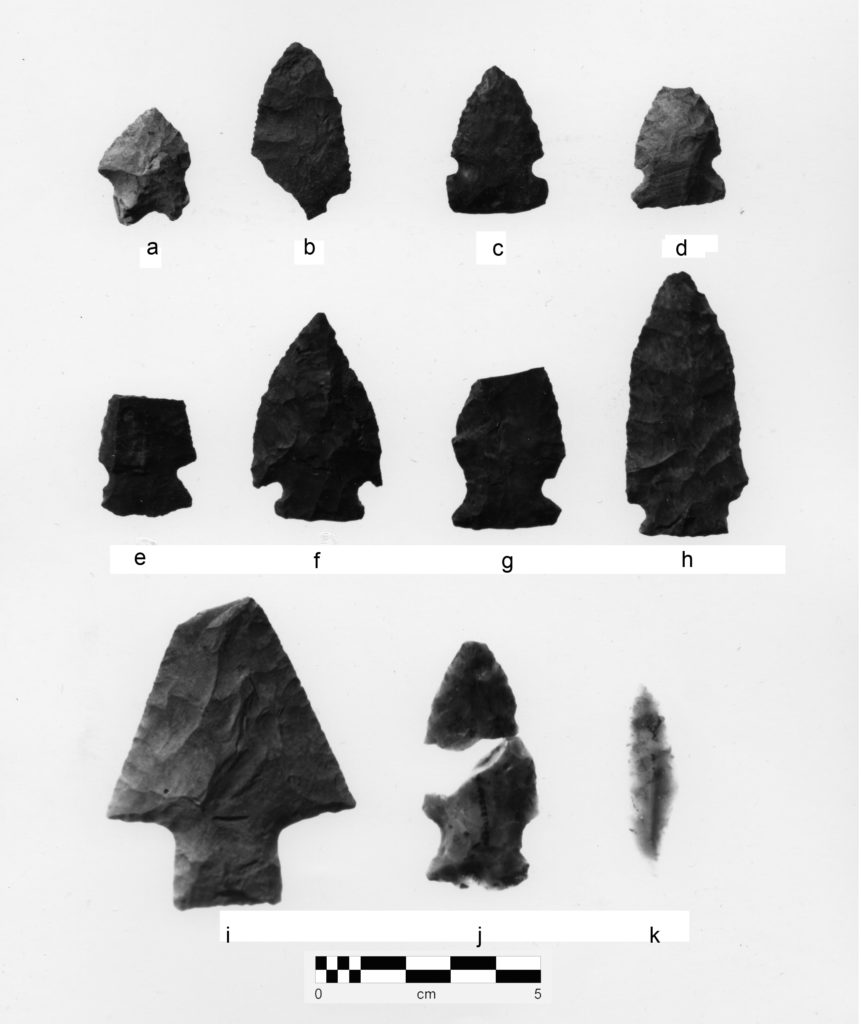
Fittingly, I continue this blog series with another extraordinary set of findings we recovered from our excavations at the Draper site in 1975 and 1978. This involves 10 projectile points which predate the occupation of the Draper Village by many centuries. Indeed, one of these projectile points may be 8,000 to 8,900 years old, while some are several millennia old.