The Draper South Field
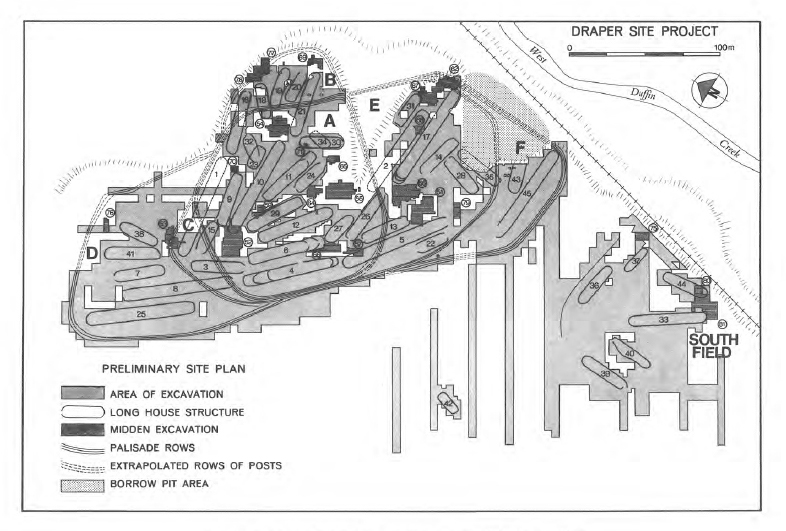
We discovered 7 houses about 40 metres south of the Draper Main Village. Two of these houses overlapped, with one being shorter. I believe the latter may have been lived in by the workers who built the rest of the houses. There was eventually a total of 6 houses separated from the Main Village by a fence, and likely occupied at the same time.
The White Site
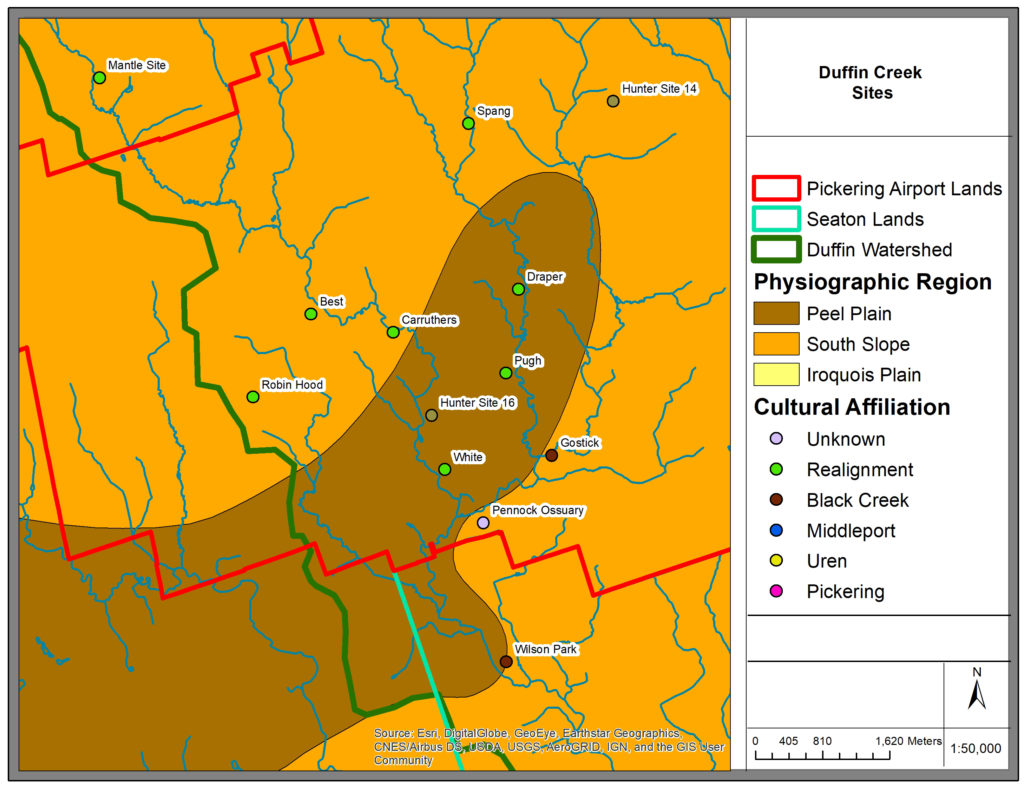
Tripp noted 10 characteristics which suggested that the White site was a farm hamlet, occupied seasonally over many years. Among these unusual features were an absence of village planning and defensive planning in the placement of houses, which on the other hand was so prevalent at Draper.
The Draper Site: Special Structures, Chiefs’ Houses
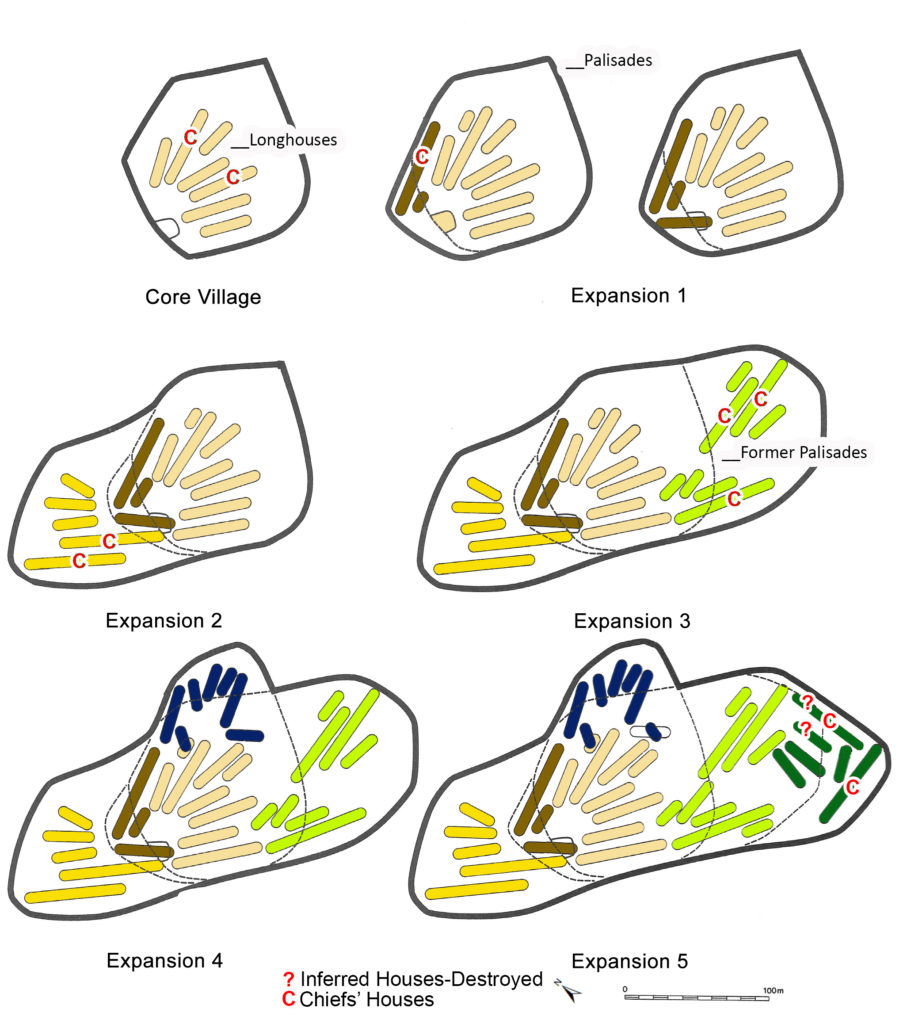
We know from the historical documents of the Historic Huron that these types of houses existed. We can use this data to help us better understand the occupants of the Draper site. It is noteworthy that as the village expanded, these long longhouses were situated on the outer edges of the expanded part of the village. Such a pattern of placement of chiefs’ houses—to potentially assist in village defenses—may be unique to the Draper site.