Before the Crawford Lake Archaeological Research Program
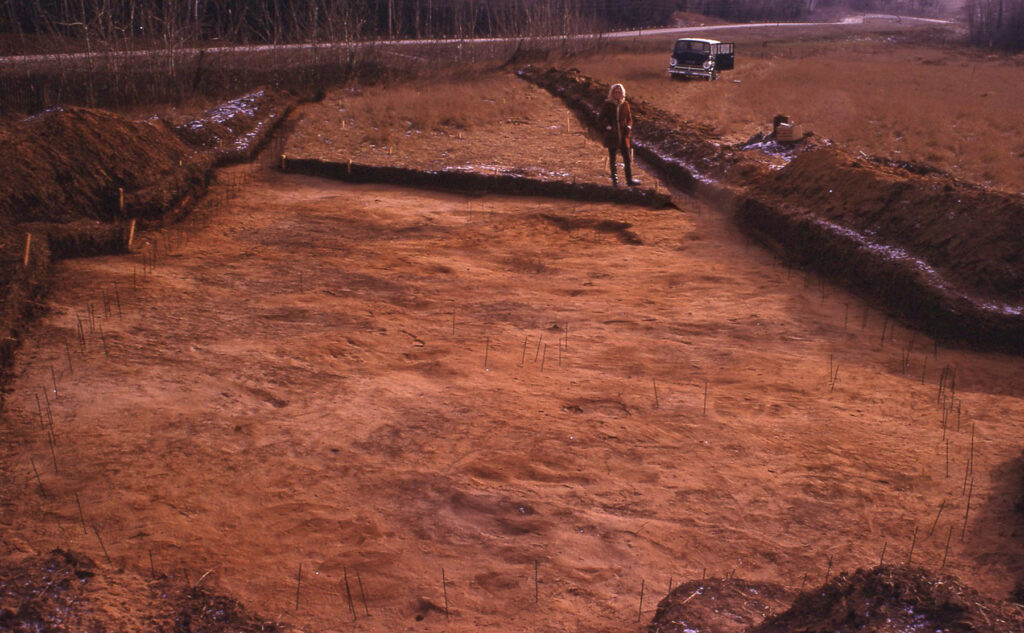
Let’s look back at other investigations I embarked on during my time as a graduate student in Anthropology at the University of Toronto. In 1969 Professor Mohr hired me to carry out an archaeological survey to find sites suitable for an archaeological field school he was to teach. The excavations were designed to introduce second-year Anthropology students to the basics of archaeological field work. As it turned out it also provided me with a broader knowledge of field methods, due to Professor Mohr’s extensive experience in archaeology in California, the America Southwest, South Korea, and Japan.
Evidence for Indigenous Warfare at the Draper Village Site Part 1
This isn’t an easy part of any country’s history to explore let alone read about or appreciate, however, it does help to understand the past in a way that gives clarity to the present and future generations of its people. As archaeologists, we don’t always know what we’re going to come across in our work. As such, we take great care and respect in excavating and preserving our findings. Some of our evaluations may be considered professional interpretations due to missing data, yet others present with such clear fact as indicated here that there is no other side but a single truth. Please note: part of this post contains graphic details which may be uncomfortable for some readers.
The Draper South Field
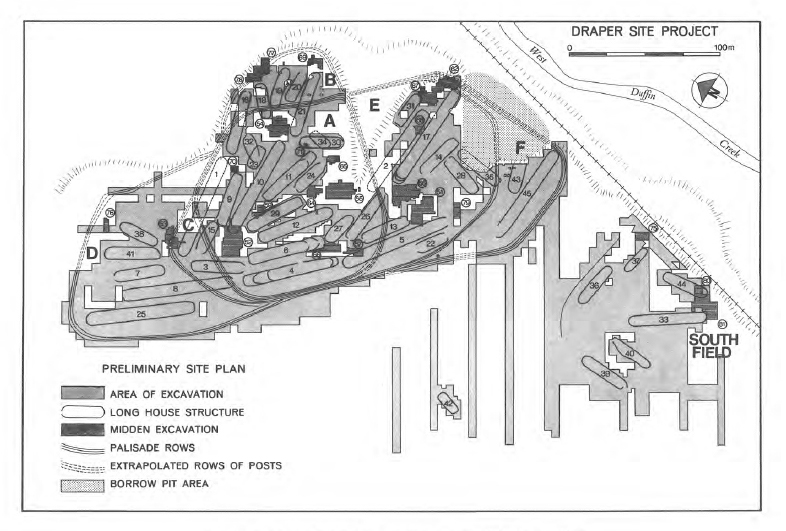
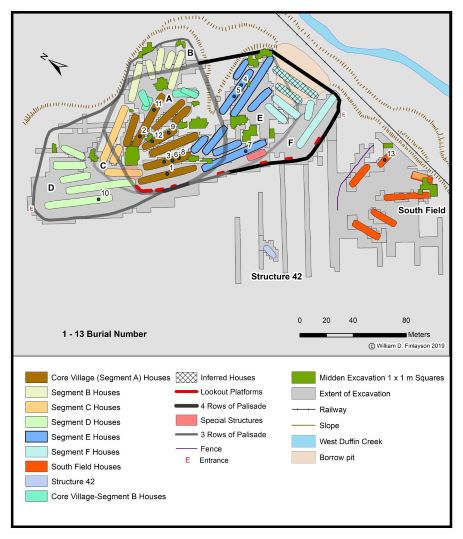
We discovered 7 houses about 40 metres south of the Draper Main Village. Two of these houses overlapped, with one being shorter. I believe the latter may have been lived in by the workers who built the rest of the houses. There was eventually a total of 6 houses separated from the Main Village by a fence, and likely occupied at the same time.