Additional Observations Contributing to Ontario’s Past Through Archaeology: More on Plagiarism
Welcome back to Our Lands Speak blog. My wishes for us all, a promising and healthy new year. That said, these times we’re living in still feel full of upheaval and uncertainty. More now than ever it is important to remind ourselves of what matters most to us, our families, and our livelihoods. Then we must stay the course of what is true and worthy of our attention. With this in mind, we continue the conversation we began in November on some of the less than noble practices affecting archaeology today.
A Year to Remember

2020 certainly has been a year to remember. I am tremendously thankful that my family and I have remained in good health throughout the pandemic. On the work front, I am so glad we were able to pivot and salvage this year in the field, and at the same time I was given time to write . . . It has been a sentimental journey and an enlightening process to review not only the field work, but the many reports, articles, publications, and graduate theses produced by a relatively large number of people over the last 42 years.
An Artist’s Concept of the Draper Site
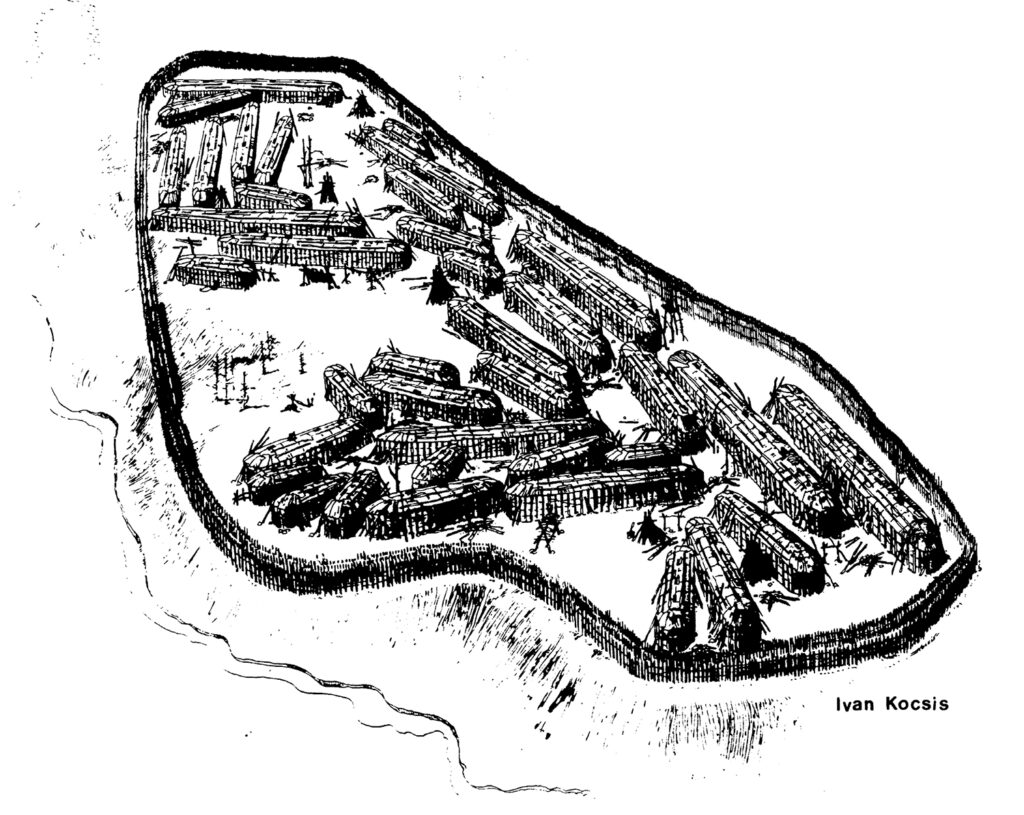
The almost complete excavation of the Draper site represents one of the first and certainly the largest of a Late Woodland village in south-central Ontario investigated on a salvage archaeology basis. I saw our work at Draper as an opportunity to have Ivan Kocsis, a very talented artist in Hamilton, create an artist’s conception of what the Draper site might have looked like after expanding five times to become a very large village of almost 2,000 people. This illustration has generally been very well received and has been used, with permission and proper acknowledgement, in a relatively large number of textbooks on archaeology.